Home › Blog › How to Check In With Family While Traveling
How to Check In With Family While Traveling
Last updated: October 6, 2026
A practical routine — a fixed schedule, a short message format, and a backup plan — for checking in with family while traveling solo without it becoming a chore.
Quick answer
How to check in with family while traveling comes down to one habit: message someone on a set schedule, keep it short, and share your rough location so they always know where you are.
Key takeaways
- Pick a fixed schedule (same day and time) instead of checking in whenever you remember.
- A short text beats a phone call for keeping the habit going every time.
- Share your rough location, not a minute-by-minute itinerary.
- Agree on what happens if you miss a check-in before you even leave.
- Keep one backup contact method in case wifi or signal drops out.
The simplest way to handle how to check in with family while traveling is to agree on a fixed schedule and a short message format before you ever leave, rather than deciding in the moment every time. A quick text sent on a set rhythm does more for everyone's peace of mind than an occasional long call.
How often should you check in with family while traveling?
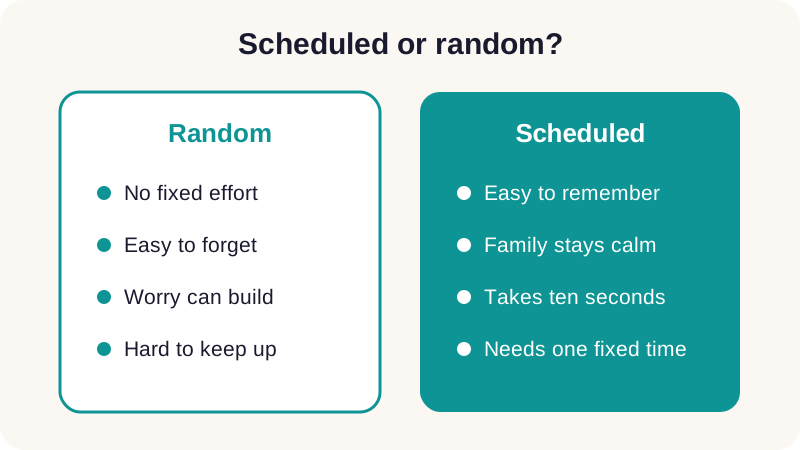
Every two to three days is the sweet spot for most solo trips. It's frequent enough that nobody starts worrying between messages, but spaced out enough that it never turns into a chore you start resenting by week two. Checking in with a friend or family member on a set schedule is one of the most commonly recommended personal safety habits for solo travel, precisely because it's simple and doesn't depend on remembering.
Setting it up only takes a few minutes before you leave:
- Pick the rhythm. Every two or three days is usually enough; daily tends to fade out by the second week.
- Pick the channel. Whatever app or method works with no wifi hassle on both ends — the simplest option you both already use.
- Pick a backup contact. One other person who also gets a message if the primary contact is asleep or unreachable for a stretch.
- Agree on the "worry line." How many hours late is normal versus a reason to actually start checking around.
What should an actual check-in message include?
Three things, and nothing more: where you are right now, where you're headed next, and when you'll check in again. A single short text covers all of it, which is exactly why it's sustainable for weeks of travel in a way a phone call usually isn't.
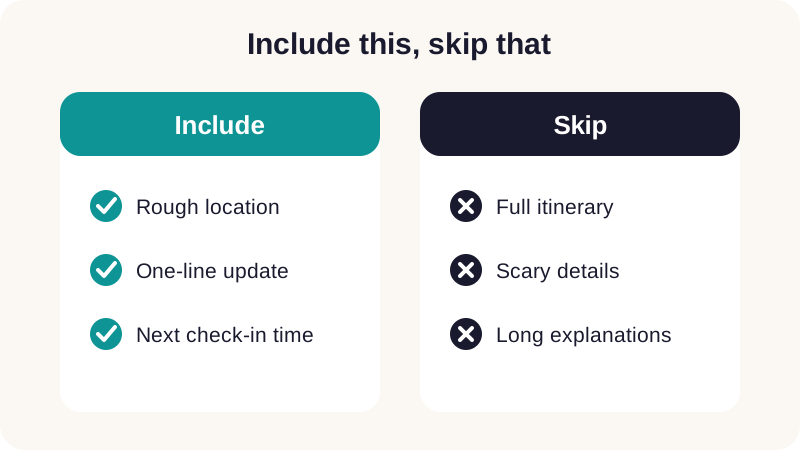
A rough location is enough — the city or neighborhood, not a live pin tracking your every move. Precise, live detail is worth adding only for a specific stretch that genuinely feels riskier, like an overnight bus or a solo hike, not for the whole trip. If your plans are loose to begin with — which a flexible solo trip itinerary usually is — "still in the same city, heading north in two days" is a perfectly complete update.
Why a text beats a call most of the time
A call needs both people free at the same moment, which almost never lines up across time zones or a packed travel day. A text can be sent from a train platform in ten seconds and read whenever family gets to it. Save the actual calls for when you both have time to talk properly, not as the check-in mechanism itself.
What if you miss a scheduled check-in?
It will happen at least once — a dead phone, a long bus with no signal, a day that just got away from you. The fix isn't to never miss one; it's to have already agreed on what a missed check-in means before it happens.
Set a rough buffer in advance — a few hours past the usual time is normal, a full missed day is the point to actually start reaching out to each other more actively. Having that line agreed beforehand means nobody has to guess in the moment, which is exactly when guessing feels worst. This kind of groundwork pairs well with the broader habit of building confidence before a first solo trip, since a lot of pre-trip anxiety is really about not having a plan for the "what if."
How do you keep this up without it feeling like a chore?
Attach the check-in to something you're already doing daily — the first coffee, the last stop of the day, plugging your phone in at night. A habit tied to an existing routine survives busy days far better than one that depends on remembering out of nowhere.
It also helps to not overthink the content each time. The same three-part message — location, next move, next check-in time — works for the entire trip. You don't need a new format every time, and family generally prefers the predictability of a familiar format to a more creative one.
If you're traveling with looser day-to-day plans, like staying in one home base and taking day trips out, the check-in message barely changes from day to day, which makes it even easier to keep up. And if a stretch of the trip starts feeling isolating rather than just busy, that's worth addressing directly — see what to do if you feel lonely traveling for ways to handle it that don't involve cutting the trip short.
None of this requires a special tool, just a habit you set up before you leave and stick to on the road. It's also the kind of thing Tramigo is being built around — a planned Safety Check-ins feature for sharing your location with trusted contacts, alongside ways to meet other travelers heading the same direction. The app hasn't launched yet, but you can sign up to be notified when it opens.
Frequently asked questions
How often should I check in with family while traveling?
Every two to three days works for most solo trips — often enough that someone always knows roughly where you are, rare enough that it doesn't become a chore. Agree on the exact rhythm with your family before you leave, rather than leaving it vague.
What should I actually say in a check-in message?
Keep it to three things: where you are now, where you're headed next, and when you'll check in again. A single short text covers all three and takes less effort to send than a call, which is why it's easier to keep up for weeks at a time.
What if I miss a scheduled check-in?
Send a quick message as soon as you notice, even if it's just "missed check-in, all fine, long travel day." Decide in advance how long family should wait before worrying — a few extra hours from a delayed bus is very different from a full missed day.
Should I share my live location with family the whole trip?
Most solo travelers find a rough location — the city or region, not GPS tracking every minute — is enough to feel safe without feeling watched. Share more precise detail for a specific risky stretch, like an overnight bus or a solo hike.