Home › Blog › How to Join a Group Tour as a Solo Traveler
How to Join a Group Tour as a Solo Traveler
Last updated: October 6, 2026
A practical guide to joining group tours as a solo traveler, starting small with local day trips before committing to a longer multi-day tour.
Quick answer
Join a group tour as a solo traveler by starting with a local day tour or a hostel-run activity, booking directly with the operator, and asking about a single supplement before signing up for a multi-day trip.
Key takeaways
- Test a group tour with a local day trip before booking a multi-day one
- Hostels often run free walking tours and pub crawls most evenings
- Ask about a single supplement before paying for a multi-day tour
- Sit near the guide and ask one logistics question to start talking
- Tell someone your plan before joining strangers on a multi-day trip
The easiest way to join a group tour as a solo traveler is to start small — a local day tour or a hostel-run activity — before paying for anything longer. It tells you fast whether the group size, pace, and guide suit you, with almost nothing on the line if it doesn't.
What kinds of group tours can a solo traveler actually join?
There isn't just one option. A local day tour booked in person once you've arrived, a multi-day tour booked ahead from home, and a free activity run by your hostel are three different commitments, each with a different level of risk if the group turns out to be a bad fit.
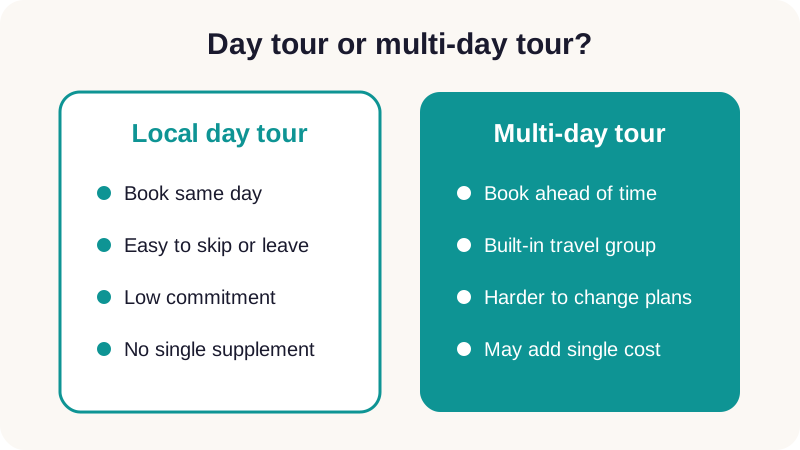
Many hostels organize a free walking tour, pub crawl, or similar group activity most evenings, and these are the lowest-stakes way to practice being the solo person in a group before you spend anything on a bigger tour. Ask at the front desk — it's usually posted on a board in the common area too, alongside flyers for local operators running day trips out of town.
A day tour also tells you something a website never will: how the guide actually runs a group, how big it really gets once everyone shows up, and whether the pace matches yours. None of that is visible from a listing, and it's a cheap way to find out before you hand over money for something longer.
How do you actually book a group tour alone?
Booking solo isn't different from booking with a friend, except you'll be asked one extra question: whether you want to share a room or pay to have one to yourself. Beyond that, the process is mostly the same everywhere, whether you're booking from a laptop at home or walking into a shopfront the morning of.
- Decide the length first. A half-day or full-day tour is the lowest-risk way to test an operator; save multi-day tours for once you've got a feel for the destination.
- Book directly with the operator when you can. Local tour desks in town, or a hostel's own noticeboard, often let you sign up same-day with no deposit.
- Ask who else is coming. Group size and age range matter more to how it feels than almost anything else — a tour of four people is a different experience from one of twenty.
- Ask about the single supplement. If the tour includes shared accommodation, find out upfront whether solo travelers are matched with a roommate or pay extra for a single room.
- Confirm the meeting point the night before. Showing up five minutes early at the right spot, rather than arriving flustered, sets the tone for the whole day.
If you're still working out the shape of the rest of your trip, it helps to treat the tour booking as separate from your accommodation plan. Booking only your first night or two in a city, rather than the whole stay, keeps you free to add a day tour once you've actually met people who recommend one, instead of locking it in from home.
What about paying more to travel alone on a tour?
Multi-day group tours are usually priced assuming two people share a room, so a solo traveler either pays a single supplement — the added cost of having a room to yourself — or gets matched with another solo traveler. Day tours almost never have this problem, since everyone just pays per seat regardless of their room situation back at the hostel or hotel.
If the supplement makes the tour too expensive, ask the operator whether they'll match you with a roommate instead. It's a common enough request that most operators have a standard answer ready, even if it isn't printed anywhere on the booking page. If you're already keeping a shoestring budget, this is often the single biggest line item to question before you book — it's worth weighing against splitting your trip budget into fixed costs, daily costs, and a buffer, so one tour doesn't blow out the whole week's numbers.
How do you make it less awkward showing up alone?
Almost everyone on a group tour who isn't traveling with a partner or family is in the same position you are, and guides are used to it. The awkward ten minutes before the tour starts is the whole difficulty — once it's moving, nobody's thinking about who arrived alone.
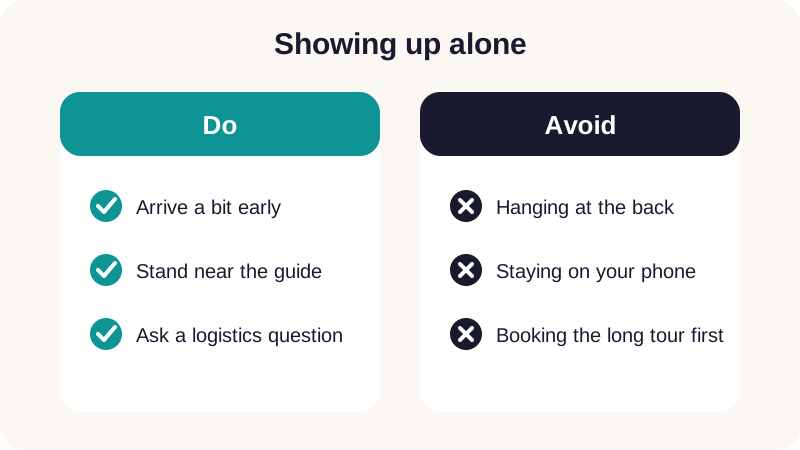
A question works better than a comment as an opener — "is this your first time here too?" gives the other person something easy to answer, and it almost always leads somewhere. If a lunch break or free hour comes up mid-tour, that's usually when the actual friendships form, not during the sightseeing itself. Those breaks are also where plans for the rest of the week quietly get made, so it's worth staying nearby rather than wandering off alone to eat.
It's also fine to just listen for the first stretch of a tour. Plenty of people on these trips are quiet until lunch and chattier by the afternoon stop — you don't have to force a conversation in the first five minutes to end up with new travel friends by the end of the day.
Is a group tour worth it if you're mostly traveling solo?
It doesn't have to be an either-or choice. Most solo travelers use group tours for the one or two things that are genuinely easier in a group — a hike with tricky logistics, a food crawl through unfamiliar neighborhoods — while keeping the rest of the trip loosely planned around a home base with day trips out. That way one bad tour doesn't wreck the whole week, and one great one can turn into plans with people you keep traveling alongside afterward.
If you'd rather line up travel companions before you even get to the day-tour stage, finding people to travel with online ahead of time is worth comparing against just showing up and joining locally — each suits a different kind of trip, and plenty of solo travelers end up doing a bit of both over the course of a longer route.
Tramigo is being built around this exact gap, with a Group Meetups feature planned for finding or starting activities like hikes or food crawls with other travelers nearby. It isn't live yet, but you can sign up to get notified when it opens, so there's one more way to find people already headed where a tour might take you.
Frequently asked questions
Do solo travelers pay more to join a group tour?
Often yes, on multi-day tours that assume double occupancy — this is usually called a single supplement. Ask about it before booking. Local day tours and hostel-run activities rarely charge this, since everyone pays per person regardless of who they're rooming with.
Is it awkward being the only solo person on a group tour?
Less than people expect. Most group tours have at least one or two other solo travelers, and guides are used to it. Arriving a few minutes early and sitting near the front gives you a natural opening to talk before the tour even starts.
Should I book a multi-day group tour before I leave home?
Not necessarily. Booking only your first night or two and testing a local day tour once you've arrived lets you judge the operator and group size before committing to something longer, which keeps the rest of your trip flexible.
How do I find group tours once I've already arrived somewhere?
Ask at your hostel's front desk or check its common area noticeboard — many run their own free walking tours or pub crawls most evenings. Local tour operators and day-trip desks in town are also easy to book in person, often the same day.