Home › Blog › How to Meet Travelers Your Own Age
How to Meet Travelers Your Own Age
Last updated: October 7, 2026
A practical guide to finding and talking to travelers in your own age group, through accommodation choices, hostel activities, and simple conversation openers.
Quick answer
The quickest way to meet travelers your own age is to choose hostels, dorms, and group activities that already attract your age group, then open with a simple, low-effort question.
Key takeaways
- Dorms and lively common areas put more same-age travelers in one room than private rooms do
- Hostel-run walking tours and pub crawls self-select for your age group without asking anyone outright
- A logistics question is an easier opener than small talk about where someone's from
- If a place skews the wrong age, switch hostels or join a locally booked day tour instead of leaving early
Knowing how to meet travelers your own age comes down to choosing places and activities where your age group already gathers, then making the first move easy. The right hostel dorm or group activity does most of the work before you say a word.
Why does age matter so much when meeting other travelers?
Age isn't really about excluding anyone — it's about shared pace. Travelers in their twenties and thirties tend to want similar things on the road: late nights, cheap food, loose plans, long conversations that go nowhere in particular. Travelers at a different stage of life often want a quieter room and an earlier dinner, and that's not a worse trip, just a different one. Matching your accommodation and activities to your own rhythm is what actually gets you talking to people — it's not luck.
This is also why the same loose backpacker route gets used over and over by people your age — certain towns, certain reputations for a good common room, certain months of the year. You don't need to stumble onto the right place. You can look for it on purpose.
Where do you actually find people close to your age?
Start with where you sleep, since it decides who you're around for breakfast, dinner, and every hour in between.
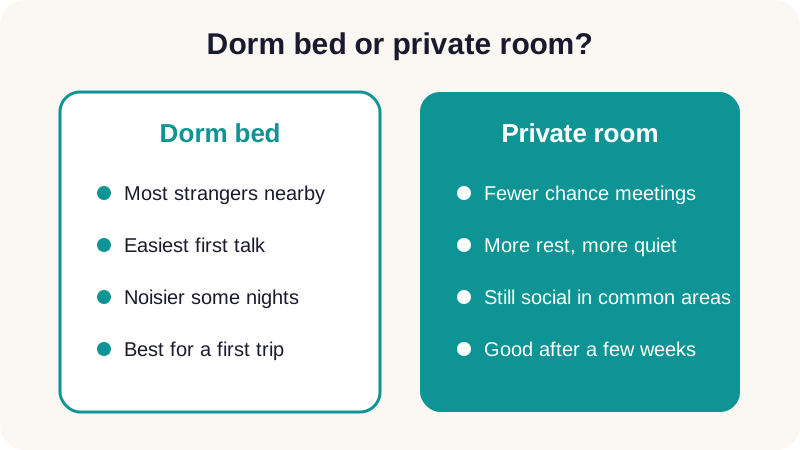
- Hostel dorms over private rooms. A shared dorm puts more strangers in the same space at the same time than any private option, and that's where a same-age travel group tends to form without anyone planning it.
- Common areas with a pulse. A kitchen people actually cook in, a rooftop, a lounge with a card game going — picking a hostel for its common space matters more than its star rating ever will.
- Evening activities the hostel already runs. Many hostels organize a free walking tour, pub crawl, or group activity most evenings, and these self-select for backpackers around your own age without you having to ask anyone directly.
- Day tours booked locally. Joining a group tour as a solo traveler, booked once you're already there rather than from home, tends to pull in the same kind of loose, flexible, same-age crowd doing the same kind of trip.
How do you actually start the conversation once you're in the room?
Being in the right place only gets you halfway there. The other half is a low-effort opener that doesn't require confidence you don't have yet.
- Sit in the communal space, not your bunk — proximity does most of the work before you say anything.
- Ask a logistics question first: a bus time, how someone's figuring out tickets, where to get food nearby.
- Mention your next stop out loud. Shared direction turns a short chat into a shared dinner or a shared train.
- Say yes to whatever's already happening — the hostel's tour, a card game, a run to the corner store — instead of trying to start something from scratch.
None of this requires being naturally outgoing. It mostly requires showing up to the common room at the right hour and asking one easy question.
What if the people around you skew a different age than you?
It happens. A hostel's reputation shifts, a town fills with a different kind of traveler one month to the next, or you simply picked wrong. It isn't a sign to give up or go home early.
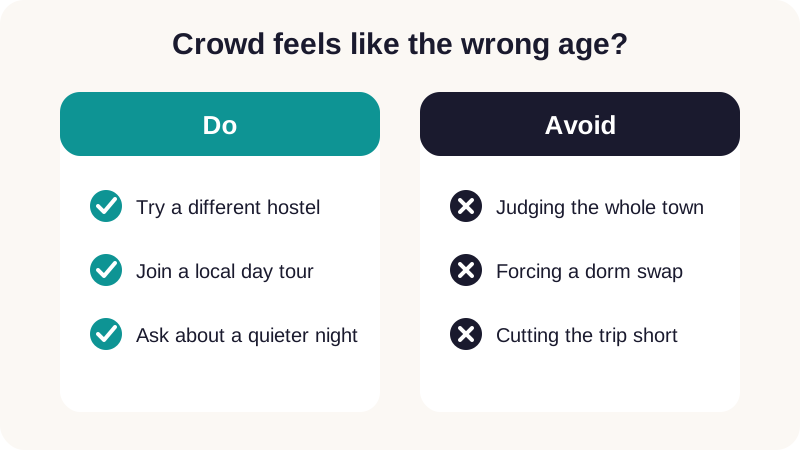
A change of neighborhood, or even just a different night of the week, can completely change who's around. Walk to a livelier-looking hostel and use its common room for the evening even if you're not staying there — nobody checks. The crowd you're looking for is usually a few streets away, not a different country.
How do you keep meeting people as you keep moving?
Every new town resets the clock, which is both the hard part of solo travel and the reason it stays interesting. Finding travel companions online before you even arrive is one way to line up a familiar face in the next city, so you're not starting from zero every single time.
It also helps to treat meeting people as a habit, not an event — one conversation per common room, one yes to whatever activity is already happening, repeated in every place you land. If you go a few days without talking to anyone your own age, that's worth noticing rather than ignoring; there are concrete ways to turn that around before it turns into a long stretch of silence.
Whatever crowd you find, keep the basic personal habits in place alongside it: tell someone outside the trip your rough plan and check in with them on a set schedule, not just when something goes wrong. Trust your own read of a room the same way you'd trust it at home.
Tramigo is being built around exactly this problem — finding people on a similar pace and similar stretch of road, through a planned Travel Matching feature and a way to find nearby travelers in real time, plus group meetups for the hikes and food crawls that are easiest to join as a group rather than alone. It hasn't launched yet, but you can sign up to be notified when it opens, so you have one more way to find your age group on the road.
Frequently asked questions
Do I have to stay in a hostel dorm to meet people my own age?
No, but it helps a lot. A shared dorm puts far more strangers in the same space at the same time than a private room does, which is exactly why same-age travel groups tend to form in dorms first. A private room still works if you spend time in the common areas instead.
How do I tell if a hostel attracts my age group before booking?
Check recent photos and reviews for mentions of a lively common room, a rooftop, or an organized evening activity. Staff and recent guests are also a reliable source — a quick message asking what the crowd has been like lately usually gets an honest answer.
Is it awkward to ask how old someone is?
Usually, yes. You rarely need to — their trip length, their next stop, and the kind of place they're staying tell you almost everything about whether you're on a similar kind of trip, which matters more than the exact number anyway.
What if the whole town seems to attract an older or younger crowd?
Switch neighborhoods or hostels before assuming the whole destination is a mismatch — the crowd often shifts within a few streets or a different night of the week. A locally booked day tour or group activity is another quick way to find a different crowd.